How To Use
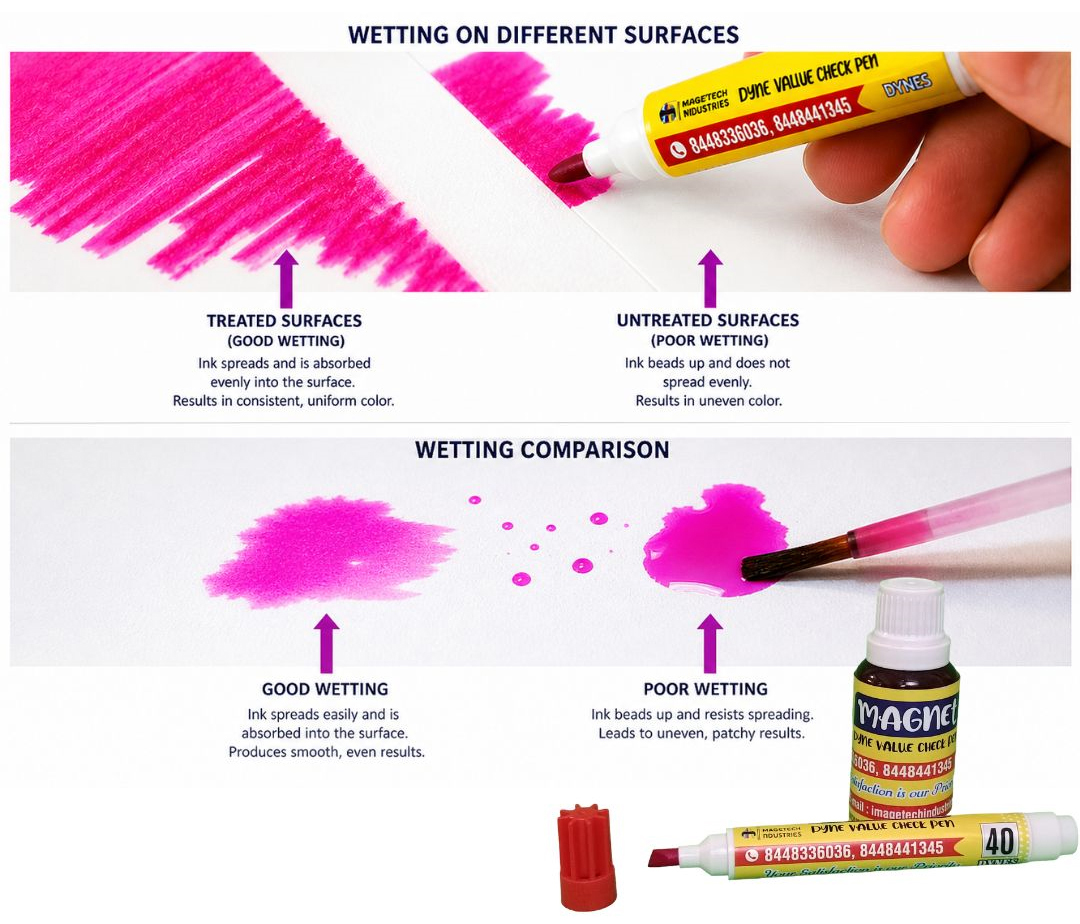
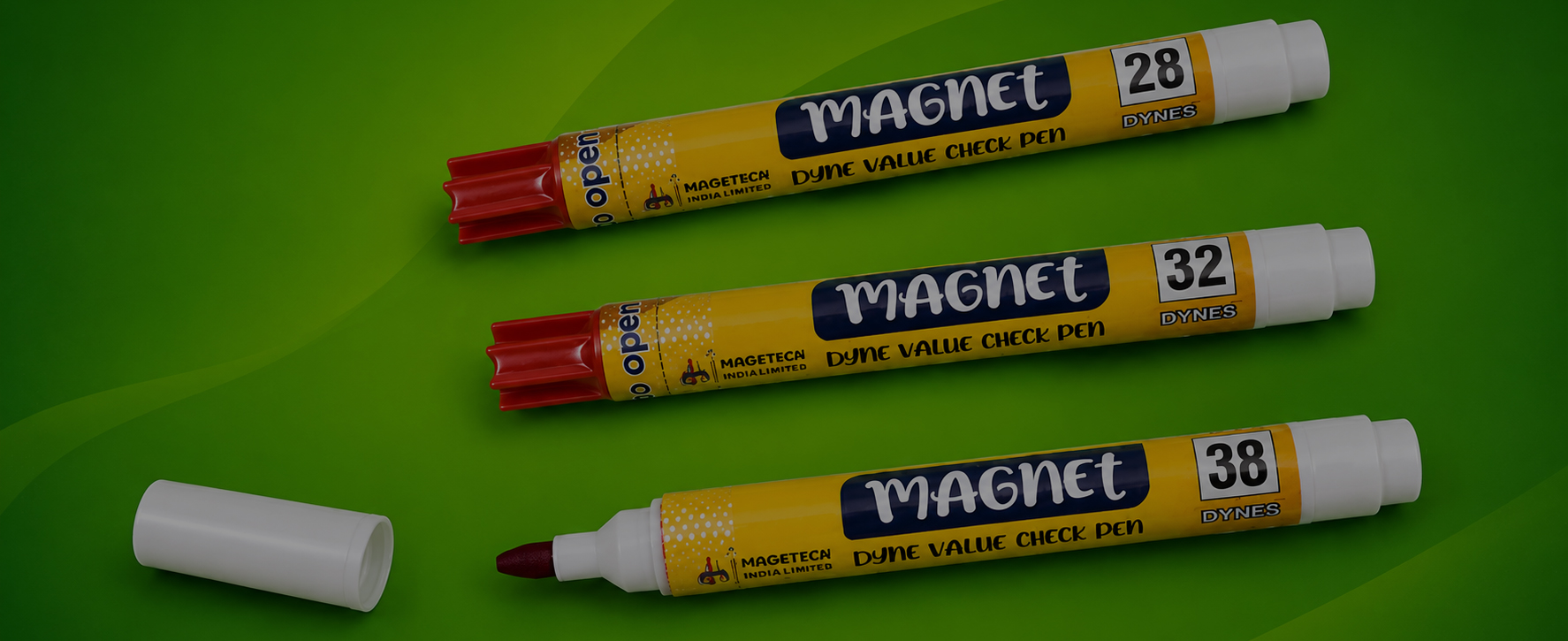
MAGNET Dyne Test Pen is a cost-effective, quick, and easy solution for measuring surface wetting and surface energy. Also known as a corona test pen, the MAGNET Dyne Test Pen provides a simple, reliable, and accurate method for evaluating the surface energy of most polymer-based materials.
The MAGNET Dyne Test Pen and Dyne test solutions are widely used during plasma surface modification, corona treatment, and flame treatment processes to check surface energy levels and substrate cleanliness. This ensures proper adhesion for printing, coating, bonding, and lamination applications.
Designed for industrial use, the MAGNET Dyne Test Pen is highly effective in quality control processes across industries such as packaging and converting, automotive, aerospace, and medical device manufacturing.
With consistent performance and ease of use, the MAGNET Dyne Test Pen helps improve product quality, reduce defects, and ensure reliable surface treatment results.
It helps ensure proper adhesion for printing, coating, bonding, and lamination applications.
Checking Standards: As per IS : 6104
| Dyne Value Range | 28, 30, 32, 34, 36, 38, 40, 42, 46, 48, 50, 52, 54, 56, 58, 60, 62, 64, 66, 68, 70, 72 Dyne/cm |
|---|---|
| Special Value Range | 31, 33, 35, 37, 39, 41, 43, 45, 47, 49, 51, 53 Dyne/cm |
Test Procedure Guidelines
- Prepare the Sample Surface
Place the sample on a clean, flat, and stable surface. If required, secure the edges to prevent curling, bending, or deformation during testing. - Check Environmental Conditions
Record the ambient temperature and relative humidity. If the sample temperature differs, allow it to stabilize to room conditions before testing for accurate results. - Perform Multiple Test Points
Use the MAGNET Dyne Test Pen to test at a minimum of three locations across the sample—at 1/4, 1/2, and 3/4 positions. For best practice, also test near the edges. - Ensure Surface Cleanliness
Avoid touching or contaminating the test surface. Even minor contamination (oil, dust, or moisture) can reduce wettability and affect accuracy. Clean the test area if necessary. - Use Fresh and Uncontaminated Pens
Always use properly stored, uncontaminated, and in-date MAGNET Dyne Test Pens to ensure consistent and reliable measurements. - Proper Storage and Handling
Store and use MAGNET Dyne Test Pens at room temperature. Keep caps tightly closed after use to prevent evaporation or contamination.
How To use & Measuring Surface Energy / Tension
-
Apply the Test Line
Using the MAGNET Dyne Test Pen, draw a smooth line on the substrate or material surface to be tested. -
Observe for 4 Seconds
Carefully observe the test line for up to 4 seconds:-
If the line remains continuous and intact for 4 seconds before any shrinkage occurs, the surface energy of the material matches the dyne value of the MAGNET Dyne Test Pen used.
-
- If the Line Breaks Immediately
-
If the line breaks into droplets instantly, it indicates that the surface energy is lower than the dyne value of the pen used.
-
To determine the correct value, repeat the test using a lower dyne value MAGNET Dyne Test Pen until the correct level is identified.
-
- If the Line Remains Beyond 4 Seconds
-
If the line does not shrink or form droplets even after 4 seconds, it indicates that the surface energy is higher than the dyne value of the pen used.
-
In this case, use a higher dyne value MAGNET Dyne Test Pen to find the accurate surface energy level.
-
-
Avoid Re-testing on the Same Area
Always perform the test on a fresh, unused area of the substrate to ensure accurate and consistent results. -
Determine the Correct Dyne Level
The correct surface energy (dyne level) is identified as the value at which the test line remains stable for approximately 4 seconds before showing signs of shrinkage or droplet formation.
MAGNET DYNE VALUE CHECK PEN
Suggested Treat Levels Chart (dynes/cm)
Flexo & Gravure
| Substrate | Water | Solvent | UV |
|---|---|---|---|
| PE | 38–44 | 36–40 | 38–50 |
| PP | 38–44 | 36–40 | 40–50 |
| PVC | 38–44 | 36–40 | 50–60 |
| PET | 52–56 | 46–54 | 54–60 |
| PS | 38–44 | 35–40 | 42–48 |
| PVDC | 40–46 | 38–42 | 52–58 |
| PU | 40–46 | 38–42 | 50–56 |
| ABS | 42–46 | 40–44 | 50–52 |
| PTFE | 40–44 | 34–39 | 36–52 |
| Silicone | 40–44 | 35–40 | 40–50 |
Offset
| Substrate | Water | Solvent | UV |
|---|---|---|---|
| PE | 40–46 | 37–42 | 40–50 |
| PP | 40–46 | 38–42 | 40–50 |
| PVC | 40–45 | 37–42 | 36–52 |
| PET | 56–60 | 46–56 | 56–60 |
| PS | 40–45 | 37–42 | 42–50 |
Lamination
| Substrate | Water | Solvent | UV |
|---|---|---|---|
| PE | 42–50 | 38–44 | 42–54 |
| PP | 42–50 | 38–44 | 42–54 |
| PET | ≥60 | ≥48 | ≥62 |
| PS | 42–52 | 37–44 | 42–54 |
Coating
| Substrate | Water | Solvent | UV |
|---|---|---|---|
| PE | 42–48 | 38–45 | 44–54 |
| PP | 42–48 | 38–45 | 44–54 |
| PET | ≥52 | ≥48 | ≥60 |
| PS | 42–50 | 38–46 | 44–54 |